13min Read
13min Read
Why Early Retirement in India Needs More Than a Fixed Deposit Strategy
Plan early retirement in India beyond fixed deposits. Build a portfolio for growth, liquidity, inflation, taxes, healthcare, and long-term withdrawals.

Ckredence Wealth
Ckredence Wealth
|

Quick Answer Early retirement in India needs more than fixed deposits because a retirement income plan must account for inflation, liquidity, taxes, healthcare, family commitments, and the risk of drawing money from investments at the wrong time. |
Early retirement in India becomes fragile when a household treats a fixed deposit rate as a complete income plan. India’s headline CPI inflation was 3.93% year-on-year in May 2026, while food inflation was 4.78%, which shows why a retirement budget cannot be built around one average assumption alone. [1]
A retirement date should follow a view of spending, liquidity, healthcare, family commitments, and portfolio roles. The question is not whether your savings look large today, but whether each future expense already has a source of funding.
• Are your current expenses different from the expenses you will carry after leaving work?
• Does your portfolio have enough liquid money for an emergency without selling long-term investments?
• Have you separated family support, healthcare, travel, and lifestyle spending from your basic monthly needs?
The data below makes the central issue visible. The cost of living does not move evenly across every part of a household budget, so a retirement plan needs more than a single fixed-income instrument.
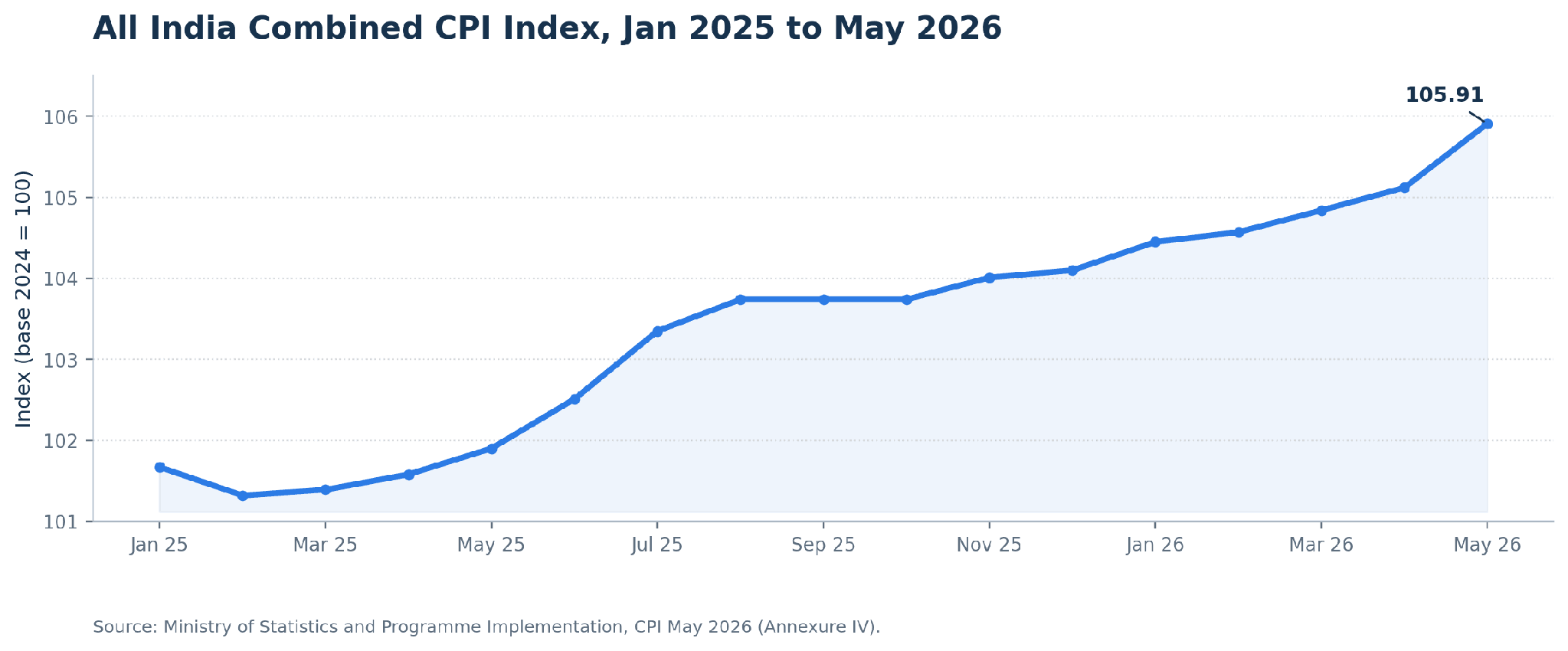
Figure 1. The All India Combined CPI index rose from 101.67 in January 2025 to 105.91 in May 2026. [1]
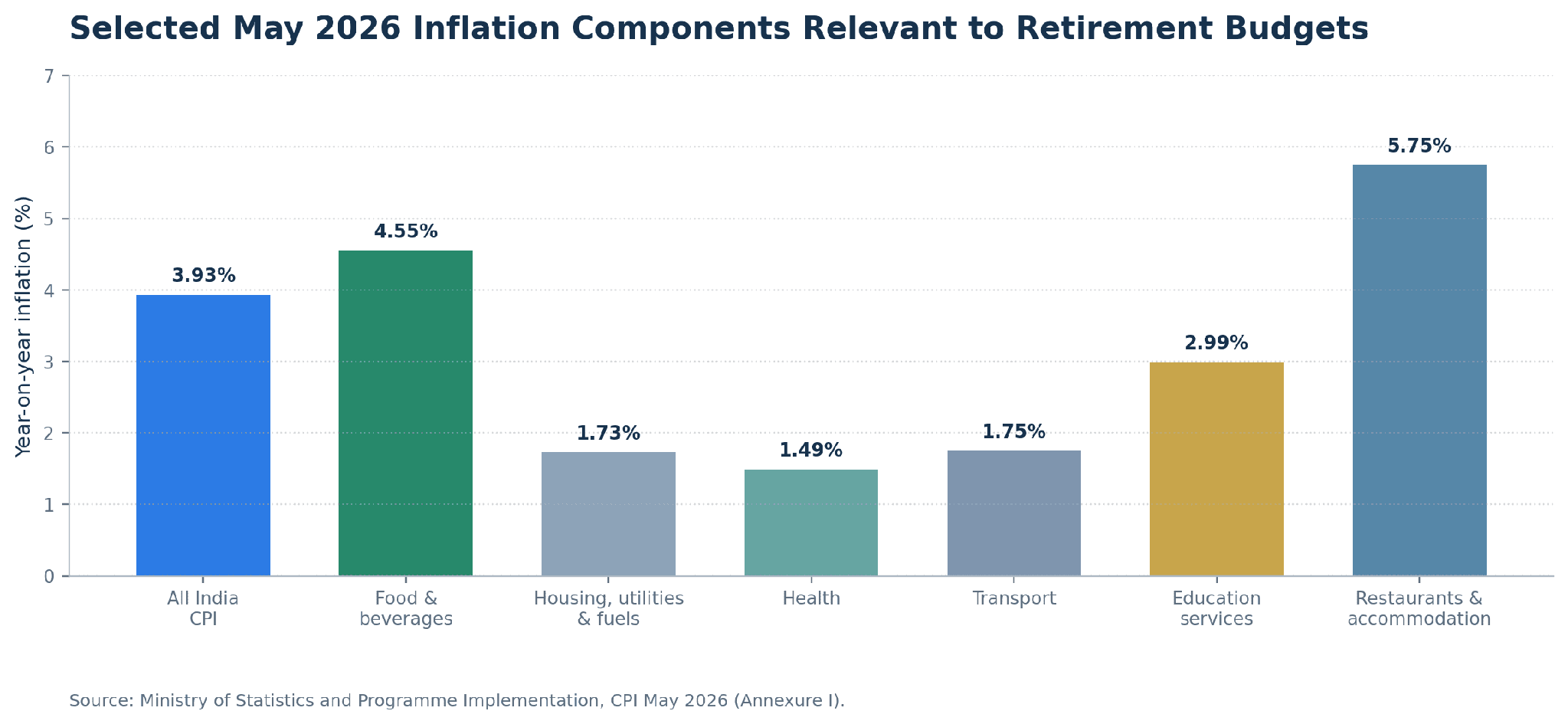
Figure 2. Selected cost categories can move differently from the overall inflation figure. [1]
PLANNING NOTE “Planning for retirement involves many assumptions about life expectancy, state of economy, interest rate and inflation.” A retirement plan needs a range of assumptions, not one fixed-deposit rate. Source: NISM Retirement Calculator |
TL;DR
• Fixed deposits work best as part of retirement liquidity, not as the full retirement engine.
• Your retirement corpus must fund lifestyle, healthcare, family obligations, and unexpected spending separately.
• A higher corpus does not automatically mean a safer retirement date.
• Early retirees need a withdrawal plan before they need a return target.
• Portfolio allocation should reflect when money is needed, not only which product offers the most visible rate.
• A review before resignation often exposes gaps hidden inside scattered investments.
Do You Have Enough to Retire Early in India, or Only Enough to Leave a Job?
Early retirement in India requires income and liquidity that continue after salary stops. The first test is not the corpus figure. It is whether the portfolio can pay for real life without forcing rushed decisions.
For a business owner, CXO, or senior professional leaving active work in their forties or fifties, the main issue is whether each future expense already has a funding source. A large corpus without a spending map often creates uncertainty from the first withdrawal.
Retirement date is a cash-flow decision
Your retirement date should follow a review of expected monthly spending, not a personal target such as “I want to stop working at 45.” Work travel and office costs can reduce, while independent insurance, healthcare, family support, and leisure costs often become more visible.
A useful plan separates permanent, flexible, and unexpected expenses. This is the same discipline behind a financial goal planner that asks for retirement age, expected life horizon, and both monthly and annual expenses. [3]
The corpus needs more than one job
A retirement corpus must fund present spending, future growth, emergency liquidity, and family commitments at the same time. When one asset type is asked to carry all these roles, every market movement becomes a personal cash-flow decision.
A broader financial independence guide can help you connect the retirement target with spending discipline and long-term portfolio roles.
The practical implication is direct: a retirement date is ready for review only when household spending and asset roles are visible together.
Your FIRE Number Is Not a Retirement Plan Until These Costs Are Separated
A FIRE number is only a starting estimate. It does not show how money will behave when healthcare, family obligations, travel, property costs, and lifestyle expenses arrive at different times.
For a household leaving a high-income role, the gap between basic expenses and lifestyle expenses is often larger than expected. Treating both as one annual number hides the decisions that matter most in weak markets or unexpected family situations.
Separate spending before you set a withdrawal plan
Spending bucket | What belongs here | Why it needs separate treatment |
|---|---|---|
Core household needs | Housing, food, utilities, routine bills | These expenses continue regardless of market conditions. |
Family commitments | Education, parents, planned support | These costs often have fixed dates and cannot be delayed. |
Lifestyle spending | Travel, leisure, memberships, upgrades | These expenses need flexibility during weak market periods. |
Contingency reserve | Health events, repairs, urgent family needs | This prevents forced withdrawals from long-term investments. |
Healthcare and insurance need their own review
Employer health cover often changes or ends when employment ends. A retirement review should therefore look at premiums, cover limits, exclusions, and a separate contingency pool before the resignation date.
This is where a retirement corpus review brings clarity. It turns scattered financial holdings into a clear map of what funds core living, what protects a family goal, and what remains available for long-term growth.
For a more detailed view of estimating the amount you need, see The ₹10 Crore Retirement Myth: What HNIs Actually Need.
Fixed Deposit vs Retirement Portfolio: What Each Part of Your Money Must Do
Fixed deposits provide capital stability and known maturity values. They are useful for defined needs, but they are not a complete early-retirement structure.
A retirement portfolio must answer a more demanding question: which part of the money pays for near-term life, and which part stays invested for the decades ahead? SEBI’s investor guidance advises investors to diversify across asset classes and align the plan with retirement goals and lifestyle. [4]
Decision question | Fixed deposit role | Retirement portfolio role |
|---|---|---|
Where do near-term bills come from? | Supports planned cash needs and short-term reserves. | Coordinates liquid assets with other income sources. |
How is purchasing power addressed? | Offers stability but has limited long-horizon growth potential. | Balances growth and stability across a longer retirement horizon. |
How are future family goals handled? | Works for defined, time-bound needs. | Links separate goals to separate time horizons. |
How are market shocks handled? | Can provide a stable funding layer. | Uses a broader withdrawal and liquidity framework. |
Fixed deposits have a job, not the whole job
Fixed deposits can work well for emergency reserves, planned expenses, and a portion of near-term withdrawals. The problem begins when every retirement need is placed inside the same product category.
Product choice should follow asset allocation, not replace it. A well-structured review decides how much money needs stability, how much needs growth, and how much needs ready access before individual instruments are selected.
Read Best Retirement Investment Plan India: Guide for Investors Over ₹1 Crore for a deeper framework on matching assets to retirement needs.
The Early Retirement Readiness Stress Test
Early retirement readiness is not confirmed by a corpus figure alone. It is confirmed when the plan survives uncomfortable questions about liquidity, health events, family support, taxes, debt, and market falls.
Use this diagnostic before deciding whether the timing works. A weak answer does not mean you should abandon the goal. It shows which part of the plan needs attention before active income stops.
Readiness check | What a good answer changes |
|---|---|
Spending is based on bank statements, not a rounded estimate | You know which expenses are permanent, flexible, and time-bound. |
Healthcare cover is independent of your employer | A medical emergency does not force an unplanned investment exit. |
High-pressure debt is addressed before salary stops | EMIs and guarantees do not dictate portfolio withdrawals. |
Near-term withdrawals have a liquidity plan | Routine bills are not dependent on a market recovery. |
Every investment has a defined job | Growth, income, liquidity, and family goals are separated. |
Tax, ownership, and nominations are reviewed | Family members can access and understand the financial system. |
Your family has seen the retirement map | Decision-making does not stop during an emergency. |
HOW TO READ THIS TEST If one area is unclear, do not try to fix it by chasing a higher return. Define the expense, identify the funding source, and decide which part of the portfolio is responsible for it. |
The business implication is simple: the right retirement date is when the plan can absorb pressure, not when a number feels emotionally comfortable.
What If Markets Fall After You Retire Early?
A market fall after retirement becomes more damaging when investments must be sold to pay routine expenses. The risk is not market movement alone. It is the combination of market movement and an immediate cash requirement.
For a household without salary income, the timing of withdrawals matters as much as the average return over a long period. That is why a retirement plan needs a defined liquidity layer before it needs a more ambitious growth assumption.
Sequence risk changes the withdrawal decision
Sequence risk is the risk of poor market returns arriving early in retirement when withdrawals have already started. Selling after a fall reduces the capital available to participate in a recovery.
A retirement structure responds by separating near-term spending money from longer-term growth assets. The objective is not to avoid market movement entirely. It is to avoid a forced sale for routine household needs.
A portfolio needs decision rules before a fall
A stronger retirement plan states what happens when expenses rise, markets fall, or family priorities change. It identifies which costs can pause, which assets fund immediate needs, and when the portfolio requires a review.
PLANNING INSIGHT Retirement risk is rarely one bad investment. It is the moment an undated expense forces an unplanned withdrawal. |
A written response to pressure is often more valuable than another holding. It is the difference between owning investments and having a retirement plan.
A Fixed-Deposit-Only Plan vs a Layered Early-Retirement Plan
A fixed-deposit-only approach treats retirement as an interest-income target. A layered retirement plan treats it as a set of changing financial jobs that need different funding sources.
The comparison is not about rejecting stability. It is about giving stability the right role while preserving the capacity for long-term growth, family needs, and decision flexibility.
Planning dimension | Fixed-deposit-only plan | Layered retirement plan |
|---|---|---|
Near-term spending | Depends largely on deposit interest and maturity timing. | Uses a planned liquidity layer for scheduled withdrawals. |
Long retirement horizon | Has limited room to respond to changing purchasing power. | Keeps a dedicated long-horizon growth allocation. |
Unexpected expense | Can disrupt the same pool used for routine spending. | Draws from a distinct contingency reserve where appropriate. |
Family goals | Often funded from the general retirement pool. | Maps each time-bound goal to a defined source. |
Portfolio review | Focuses on rate renewal and maturity dates. | Reviews spending, asset roles, risk, tax, and withdrawals together. |
The practical choice is not between safety and growth. It is between one product doing every job, or each part of your money having a purpose.
Why a “Safe” Plan Can Still Leave an Early Retiree Exposed
Many investors have already tried a mix of fixed deposits, insurance policies, mutual funds, and direct equity. The issue is rarely effort. The issue is that the investments were accumulated over time without a shared retirement role.
A plan can look conservative while still being exposed to a healthcare gap, a family commitment, a tax surprise, or a liquidity shortfall. Safety is not a label attached to one product. It is the quality of the entire withdrawal and contingency structure.
The common failure pattern
A household starts with the most visible product, then adds more products whenever a new need appears. Years later, the portfolio has holdings but no map, and every decision is based on the latest rate, return, or market headline.
This is where an independent review becomes useful. It helps distinguish money that should remain stable from money that needs to grow, and identifies goals that should not compete with retirement withdrawals.
Investors who want to understand the difference between a portfolio-only view and a full financial view can read Wealth Management vs Portfolio Management: Key Differences.
A retirement discussion should leave you with a clear gap assessment, whether or not you take the next step. It should not begin with a product recommendation.
A Personal Retirement Review That Connects the Whole Picture
Early retirement becomes harder when money is spread across deposits, mutual funds, direct equity, business assets, insurance policies, and property. At that point, a product-by-product check cannot reveal whether your money is working as one system.
A more useful discussion starts with your full financial picture: lifestyle goals, liquidity needs, risk capacity, current holdings, and the role each asset should play. The aim is to make every part of the plan answer a clear question.
What the review should cover
• Near-term withdrawals and the liquidity structure needed to support them.
• Long-term growth holdings and whether they match the retirement horizon.
• Family commitments, healthcare needs, insurance cover, and tax considerations.
• Investments that no longer have a defined purpose in the retirement plan.
At Ckredence Wealth, the conversation is built around these links rather than a one-product answer. It helps investors move from scattered holdings to a retirement map that is easier to review, discuss, and adjust over time.
Explore mutual fund advisory services and portfolio management services for the next layer of the decision.
NEXT STEP If your retirement date depends on a few large deposits, scattered mutual funds, or business cash flow that has never been separated from personal wealth, a structured review can show where the plan needs stronger foundations. |
The discussion is for assessing your retirement plan, not for pushing a product. You leave with a clearer view of what is working, what needs attention, and which assumptions need to be tested.
Conclusion
Early retirement in India needs a plan that links spending, liquidity, inflation, family commitments, healthcare, taxes, and investment allocation. Fixed deposits can provide stability, but they should not be expected to carry every retirement requirement.
The better next step is a written retirement map that shows what each asset funds, when it may be used, and what happens when life or markets change. That is how an early-retirement goal becomes a decision you can stand behind.
IMPORTANT DISCLOSURE This article is educational and does not constitute investment, tax, or legal advice. Investment decisions should follow your financial position, risk profile, and consultation with qualified professionals where required. |
FAQs
01.
Is a fixed deposit enough for early retirement in India?
A fixed deposit can support stability and near-term spending needs. Early retirement also needs a plan for liquidity, growth, and withdrawals.
02.
How do I know whether I can retire early in India?
Review actual spending, liabilities, healthcare cover, family commitments, and portfolio liquidity. Your retirement date depends on whether these needs have defined funding sources.
03.
What is the biggest risk in early retirement planning?
The biggest risk is needing to sell long-term investments during a weak market period. A separate liquidity plan reduces the chance of a forced sale.
04.
Should I get professional help before retiring early?
Professional guidance becomes useful when investments, business assets, taxes, or family goals overlap. A structured review helps connect these decisions before active income ends.
Quick Answer Early retirement in India needs more than fixed deposits because a retirement income plan must account for inflation, liquidity, taxes, healthcare, family commitments, and the risk of drawing money from investments at the wrong time. |
Early retirement in India becomes fragile when a household treats a fixed deposit rate as a complete income plan. India’s headline CPI inflation was 3.93% year-on-year in May 2026, while food inflation was 4.78%, which shows why a retirement budget cannot be built around one average assumption alone. [1]
A retirement date should follow a view of spending, liquidity, healthcare, family commitments, and portfolio roles. The question is not whether your savings look large today, but whether each future expense already has a source of funding.
• Are your current expenses different from the expenses you will carry after leaving work?
• Does your portfolio have enough liquid money for an emergency without selling long-term investments?
• Have you separated family support, healthcare, travel, and lifestyle spending from your basic monthly needs?
The data below makes the central issue visible. The cost of living does not move evenly across every part of a household budget, so a retirement plan needs more than a single fixed-income instrument.

Figure 1. The All India Combined CPI index rose from 101.67 in January 2025 to 105.91 in May 2026. [1]

Figure 2. Selected cost categories can move differently from the overall inflation figure. [1]
PLANNING NOTE “Planning for retirement involves many assumptions about life expectancy, state of economy, interest rate and inflation.” A retirement plan needs a range of assumptions, not one fixed-deposit rate. Source: NISM Retirement Calculator |
TL;DR
• Fixed deposits work best as part of retirement liquidity, not as the full retirement engine.
• Your retirement corpus must fund lifestyle, healthcare, family obligations, and unexpected spending separately.
• A higher corpus does not automatically mean a safer retirement date.
• Early retirees need a withdrawal plan before they need a return target.
• Portfolio allocation should reflect when money is needed, not only which product offers the most visible rate.
• A review before resignation often exposes gaps hidden inside scattered investments.
Do You Have Enough to Retire Early in India, or Only Enough to Leave a Job?
Early retirement in India requires income and liquidity that continue after salary stops. The first test is not the corpus figure. It is whether the portfolio can pay for real life without forcing rushed decisions.
For a business owner, CXO, or senior professional leaving active work in their forties or fifties, the main issue is whether each future expense already has a funding source. A large corpus without a spending map often creates uncertainty from the first withdrawal.
Retirement date is a cash-flow decision
Your retirement date should follow a review of expected monthly spending, not a personal target such as “I want to stop working at 45.” Work travel and office costs can reduce, while independent insurance, healthcare, family support, and leisure costs often become more visible.
A useful plan separates permanent, flexible, and unexpected expenses. This is the same discipline behind a financial goal planner that asks for retirement age, expected life horizon, and both monthly and annual expenses. [3]
The corpus needs more than one job
A retirement corpus must fund present spending, future growth, emergency liquidity, and family commitments at the same time. When one asset type is asked to carry all these roles, every market movement becomes a personal cash-flow decision.
A broader financial independence guide can help you connect the retirement target with spending discipline and long-term portfolio roles.
The practical implication is direct: a retirement date is ready for review only when household spending and asset roles are visible together.
Your FIRE Number Is Not a Retirement Plan Until These Costs Are Separated
A FIRE number is only a starting estimate. It does not show how money will behave when healthcare, family obligations, travel, property costs, and lifestyle expenses arrive at different times.
For a household leaving a high-income role, the gap between basic expenses and lifestyle expenses is often larger than expected. Treating both as one annual number hides the decisions that matter most in weak markets or unexpected family situations.
Separate spending before you set a withdrawal plan
Spending bucket | What belongs here | Why it needs separate treatment |
|---|---|---|
Core household needs | Housing, food, utilities, routine bills | These expenses continue regardless of market conditions. |
Family commitments | Education, parents, planned support | These costs often have fixed dates and cannot be delayed. |
Lifestyle spending | Travel, leisure, memberships, upgrades | These expenses need flexibility during weak market periods. |
Contingency reserve | Health events, repairs, urgent family needs | This prevents forced withdrawals from long-term investments. |
Healthcare and insurance need their own review
Employer health cover often changes or ends when employment ends. A retirement review should therefore look at premiums, cover limits, exclusions, and a separate contingency pool before the resignation date.
This is where a retirement corpus review brings clarity. It turns scattered financial holdings into a clear map of what funds core living, what protects a family goal, and what remains available for long-term growth.
For a more detailed view of estimating the amount you need, see The ₹10 Crore Retirement Myth: What HNIs Actually Need.
Fixed Deposit vs Retirement Portfolio: What Each Part of Your Money Must Do
Fixed deposits provide capital stability and known maturity values. They are useful for defined needs, but they are not a complete early-retirement structure.
A retirement portfolio must answer a more demanding question: which part of the money pays for near-term life, and which part stays invested for the decades ahead? SEBI’s investor guidance advises investors to diversify across asset classes and align the plan with retirement goals and lifestyle. [4]
Decision question | Fixed deposit role | Retirement portfolio role |
|---|---|---|
Where do near-term bills come from? | Supports planned cash needs and short-term reserves. | Coordinates liquid assets with other income sources. |
How is purchasing power addressed? | Offers stability but has limited long-horizon growth potential. | Balances growth and stability across a longer retirement horizon. |
How are future family goals handled? | Works for defined, time-bound needs. | Links separate goals to separate time horizons. |
How are market shocks handled? | Can provide a stable funding layer. | Uses a broader withdrawal and liquidity framework. |
Fixed deposits have a job, not the whole job
Fixed deposits can work well for emergency reserves, planned expenses, and a portion of near-term withdrawals. The problem begins when every retirement need is placed inside the same product category.
Product choice should follow asset allocation, not replace it. A well-structured review decides how much money needs stability, how much needs growth, and how much needs ready access before individual instruments are selected.
Read Best Retirement Investment Plan India: Guide for Investors Over ₹1 Crore for a deeper framework on matching assets to retirement needs.
The Early Retirement Readiness Stress Test
Early retirement readiness is not confirmed by a corpus figure alone. It is confirmed when the plan survives uncomfortable questions about liquidity, health events, family support, taxes, debt, and market falls.
Use this diagnostic before deciding whether the timing works. A weak answer does not mean you should abandon the goal. It shows which part of the plan needs attention before active income stops.
Readiness check | What a good answer changes |
|---|---|
Spending is based on bank statements, not a rounded estimate | You know which expenses are permanent, flexible, and time-bound. |
Healthcare cover is independent of your employer | A medical emergency does not force an unplanned investment exit. |
High-pressure debt is addressed before salary stops | EMIs and guarantees do not dictate portfolio withdrawals. |
Near-term withdrawals have a liquidity plan | Routine bills are not dependent on a market recovery. |
Every investment has a defined job | Growth, income, liquidity, and family goals are separated. |
Tax, ownership, and nominations are reviewed | Family members can access and understand the financial system. |
Your family has seen the retirement map | Decision-making does not stop during an emergency. |
HOW TO READ THIS TEST If one area is unclear, do not try to fix it by chasing a higher return. Define the expense, identify the funding source, and decide which part of the portfolio is responsible for it. |
The business implication is simple: the right retirement date is when the plan can absorb pressure, not when a number feels emotionally comfortable.
What If Markets Fall After You Retire Early?
A market fall after retirement becomes more damaging when investments must be sold to pay routine expenses. The risk is not market movement alone. It is the combination of market movement and an immediate cash requirement.
For a household without salary income, the timing of withdrawals matters as much as the average return over a long period. That is why a retirement plan needs a defined liquidity layer before it needs a more ambitious growth assumption.
Sequence risk changes the withdrawal decision
Sequence risk is the risk of poor market returns arriving early in retirement when withdrawals have already started. Selling after a fall reduces the capital available to participate in a recovery.
A retirement structure responds by separating near-term spending money from longer-term growth assets. The objective is not to avoid market movement entirely. It is to avoid a forced sale for routine household needs.
A portfolio needs decision rules before a fall
A stronger retirement plan states what happens when expenses rise, markets fall, or family priorities change. It identifies which costs can pause, which assets fund immediate needs, and when the portfolio requires a review.
PLANNING INSIGHT Retirement risk is rarely one bad investment. It is the moment an undated expense forces an unplanned withdrawal. |
A written response to pressure is often more valuable than another holding. It is the difference between owning investments and having a retirement plan.
A Fixed-Deposit-Only Plan vs a Layered Early-Retirement Plan
A fixed-deposit-only approach treats retirement as an interest-income target. A layered retirement plan treats it as a set of changing financial jobs that need different funding sources.
The comparison is not about rejecting stability. It is about giving stability the right role while preserving the capacity for long-term growth, family needs, and decision flexibility.
Planning dimension | Fixed-deposit-only plan | Layered retirement plan |
|---|---|---|
Near-term spending | Depends largely on deposit interest and maturity timing. | Uses a planned liquidity layer for scheduled withdrawals. |
Long retirement horizon | Has limited room to respond to changing purchasing power. | Keeps a dedicated long-horizon growth allocation. |
Unexpected expense | Can disrupt the same pool used for routine spending. | Draws from a distinct contingency reserve where appropriate. |
Family goals | Often funded from the general retirement pool. | Maps each time-bound goal to a defined source. |
Portfolio review | Focuses on rate renewal and maturity dates. | Reviews spending, asset roles, risk, tax, and withdrawals together. |
The practical choice is not between safety and growth. It is between one product doing every job, or each part of your money having a purpose.
Why a “Safe” Plan Can Still Leave an Early Retiree Exposed
Many investors have already tried a mix of fixed deposits, insurance policies, mutual funds, and direct equity. The issue is rarely effort. The issue is that the investments were accumulated over time without a shared retirement role.
A plan can look conservative while still being exposed to a healthcare gap, a family commitment, a tax surprise, or a liquidity shortfall. Safety is not a label attached to one product. It is the quality of the entire withdrawal and contingency structure.
The common failure pattern
A household starts with the most visible product, then adds more products whenever a new need appears. Years later, the portfolio has holdings but no map, and every decision is based on the latest rate, return, or market headline.
This is where an independent review becomes useful. It helps distinguish money that should remain stable from money that needs to grow, and identifies goals that should not compete with retirement withdrawals.
Investors who want to understand the difference between a portfolio-only view and a full financial view can read Wealth Management vs Portfolio Management: Key Differences.
A retirement discussion should leave you with a clear gap assessment, whether or not you take the next step. It should not begin with a product recommendation.
A Personal Retirement Review That Connects the Whole Picture
Early retirement becomes harder when money is spread across deposits, mutual funds, direct equity, business assets, insurance policies, and property. At that point, a product-by-product check cannot reveal whether your money is working as one system.
A more useful discussion starts with your full financial picture: lifestyle goals, liquidity needs, risk capacity, current holdings, and the role each asset should play. The aim is to make every part of the plan answer a clear question.
What the review should cover
• Near-term withdrawals and the liquidity structure needed to support them.
• Long-term growth holdings and whether they match the retirement horizon.
• Family commitments, healthcare needs, insurance cover, and tax considerations.
• Investments that no longer have a defined purpose in the retirement plan.
At Ckredence Wealth, the conversation is built around these links rather than a one-product answer. It helps investors move from scattered holdings to a retirement map that is easier to review, discuss, and adjust over time.
Explore mutual fund advisory services and portfolio management services for the next layer of the decision.
NEXT STEP If your retirement date depends on a few large deposits, scattered mutual funds, or business cash flow that has never been separated from personal wealth, a structured review can show where the plan needs stronger foundations. |
The discussion is for assessing your retirement plan, not for pushing a product. You leave with a clearer view of what is working, what needs attention, and which assumptions need to be tested.
Conclusion
Early retirement in India needs a plan that links spending, liquidity, inflation, family commitments, healthcare, taxes, and investment allocation. Fixed deposits can provide stability, but they should not be expected to carry every retirement requirement.
The better next step is a written retirement map that shows what each asset funds, when it may be used, and what happens when life or markets change. That is how an early-retirement goal becomes a decision you can stand behind.
IMPORTANT DISCLOSURE This article is educational and does not constitute investment, tax, or legal advice. Investment decisions should follow your financial position, risk profile, and consultation with qualified professionals where required. |
FAQs
01.
Is a fixed deposit enough for early retirement in India?
A fixed deposit can support stability and near-term spending needs. Early retirement also needs a plan for liquidity, growth, and withdrawals.
02.
How do I know whether I can retire early in India?
Review actual spending, liabilities, healthcare cover, family commitments, and portfolio liquidity. Your retirement date depends on whether these needs have defined funding sources.
03.
What is the biggest risk in early retirement planning?
The biggest risk is needing to sell long-term investments during a weak market period. A separate liquidity plan reduces the chance of a forced sale.
04.
Should I get professional help before retiring early?
Professional guidance becomes useful when investments, business assets, taxes, or family goals overlap. A structured review helps connect these decisions before active income ends.