12min Read

12min Read

Mutual Fund Advisory in Surat: Regular vs Direct, and What to Verify First

Mutual Fund Advisory in Surat: Regular vs Direct, and What to Verify First

Mutual Fund Advisory in Surat: Regular vs Direct, and What to Verify First

Mutual fund advisory in Surat, explained: AMFI distributor versus SEBI RIA, what regular plans quietly cost you, and how SIP and SWP actually work.

Mutual fund advisory in Surat, explained: AMFI distributor versus SEBI RIA, what regular plans quietly cost you, and how SIP and SWP actually work.

Mutual fund advisory in Surat, explained: AMFI distributor versus SEBI RIA, what regular plans quietly cost you, and how SIP and SWP actually work.

Ckredence Wealth

Ckredence Wealth

|

Ckredence Wealth banner for mutual fund advisory in Surat showing an advisor reviewing investment documents and digital portfolio data, representing regular vs direct mutual fund plan selection.

Mutual fund advisory in Surat is the most accessible entry point into professional investing, no Rs.50 lakh minimum, no lock-in most of the time, SIPs starting from a few hundred rupees. That accessibility is exactly why the distinction between an AMFI-registered distributor and a SEBI-registered investment advisor gets blurred more here than anywhere else in wealth advisory.

The gap is not trivial. The expense ratio difference between a regular and a direct plan typically runs 0.5 to 1.0 percentage points a year, paid to the distributor for as long as you stay invested, whether or not they do anything further for you that year.

If you are also evaluating PMS or a broader advisory relationship in Surat, our guides on PMS in Surat and wealth advisory in Surat cover those categories in depth. This one is specifically about mutual funds.

Before you choose, ask yourself:

  • Is the person you are talking to an AMFI-registered distributor, a SEBI-registered advisor, or both?

  • Do you know whether you are being offered a regular plan or a direct plan, and what that costs you annually?

  • Do you need a SIP to build a corpus, or an SWP to draw income from one you already have?

This guide covers exactly that, so the choice comes down to what you actually need, not which plan pays the advisor more.

TL;DR

  • AMFI-registered distributors earn commission and typically push regular plans; SEBI-registered RIAs charge a fee and typically push direct plans.

  • The regular-vs-direct expense gap, usually 0.5 to 1.0 percentage points a year, compounds meaningfully over a long SIP.

  • SIPs build a corpus; SWPs draw income from one you already have, different tools for different needs.

  • Registration, AMFI or SEBI, is a floor to verify, not proof of a good fit.

AMFI Distributor vs SEBI RIA: The Distinction That Matters Most

Both can legally help you invest in mutual funds, but they are paid differently, and that changes what they are incentivized to recommend. Our comparison of direct and regular mutual funds covers the mechanics in more depth.

Factor

AMFI-Registered MFD

SEBI-Registered RIA

Compensation

Trail commission from the fund house

Fee paid directly by you

Plan recommended

Usually regular plans

Usually direct plans

Fiduciary duty

Not legally required

Legally required

Best suited for

Simpler, transactional needs

Ongoing, goal-based planning

Table: AMFI-registered distributor versus SEBI-registered RIA for mutual fund advisory.

What the Regular vs Direct Gap Actually Costs You

A 0.5 to 1.0 percentage point difference sounds small until it compounds over a real investing horizon.
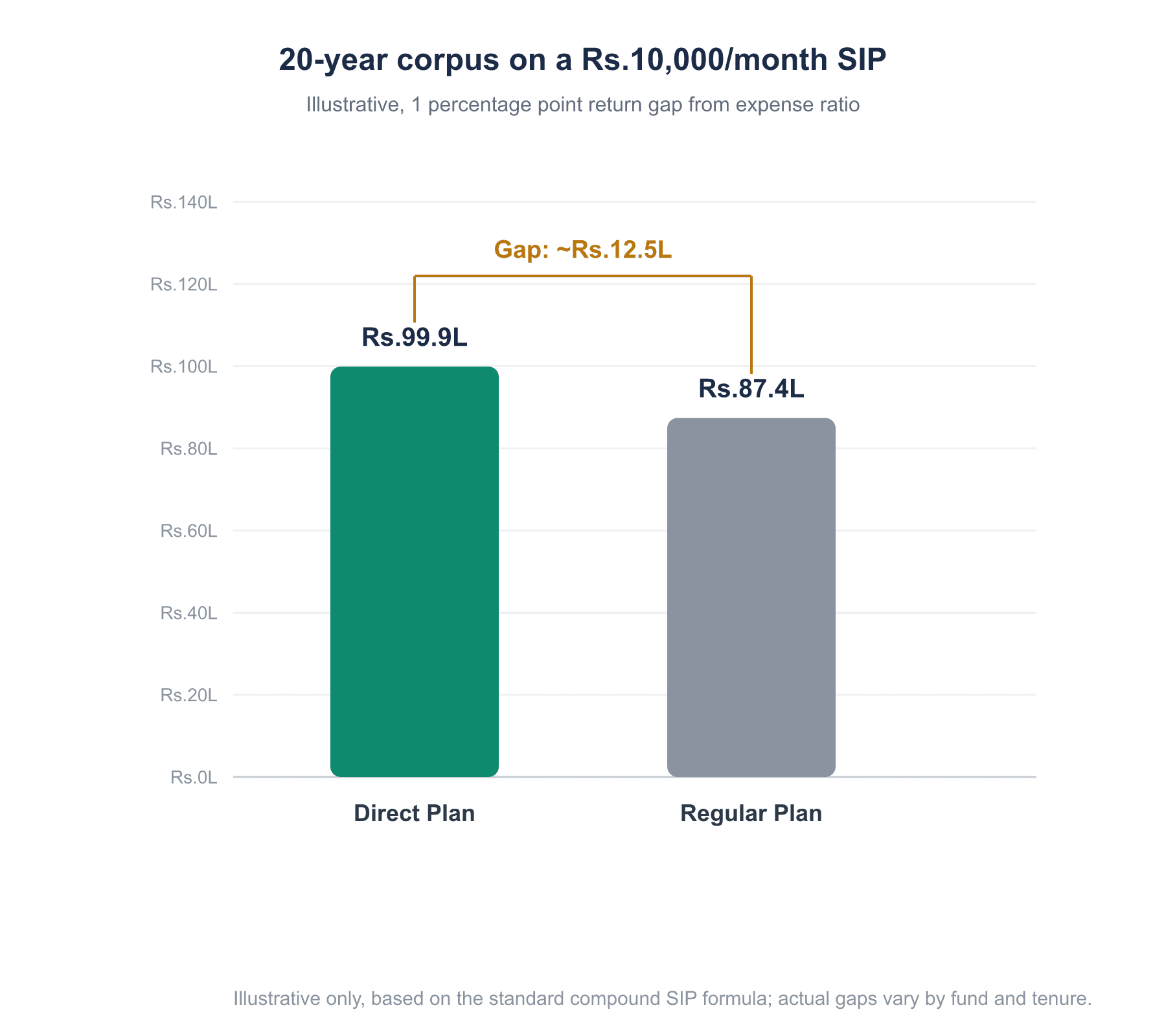
20-year SIP corpus comparison, direct plan versus regular plan

Illustrative 20-year corpus on a Rs.10,000 monthly SIP, direct versus regular plan.

That gap is not a one-time fee, it is paid every year you stay invested, regardless of whether the distributor does anything further for you that year. It is worth asking directly what ongoing service justifies it.

A SMALL PERCENTAGE COMPOUNDS INTO A LARGE NUMBER

What looks like a rounding error in year one becomes real money by year twenty. Know which plan you are actually in.

Schedule a Consultation

Tax Treatment of Mutual Fund Gains

SIP and SWP decisions look different once tax is factored in, and this is where the numbers actually land:
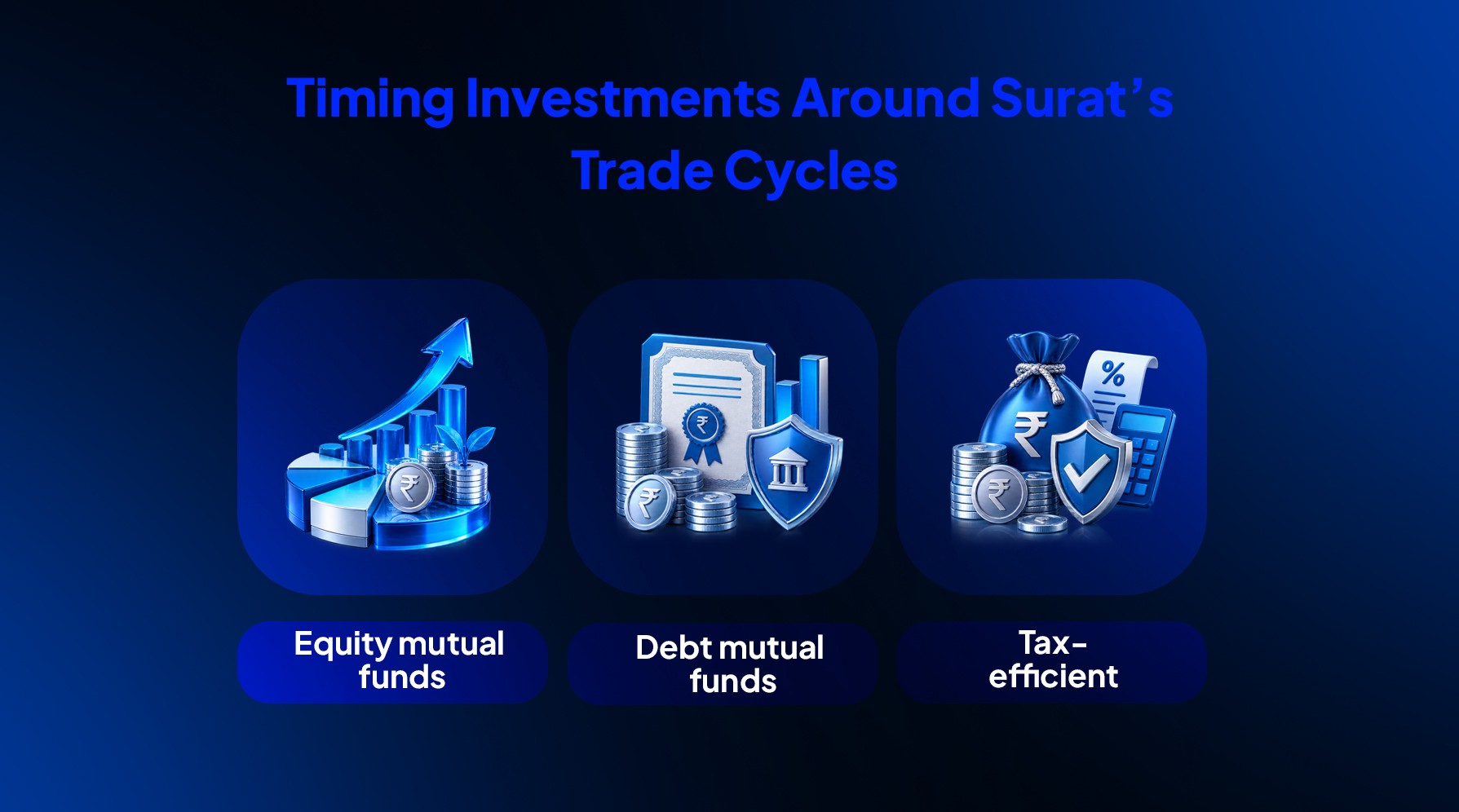
Timing investments around Surat’s trade cycles visual showing equity mutual funds, debt mutual funds, and tax-efficient investment options for aligning mutual fund decisions with irregular trade-linked cash flows.

Equity mutual funds: gains held under 12 months are taxed as STCG at 20%. Gains held over 12 months are taxed as LTCG at 12.5%, with the first Rs.1.25 lakh of gains in a financial year exempt.

  • Debt mutual funds: taxed at your income slab rate regardless of how long you hold them, since the LTCG indexation benefit for debt funds was removed in April 2023.

  • For an SWP, only the gain portion of each withdrawal is taxed, not the full amount, which is often more tax-aware than drawing the same income from FD interest.

Our guide to mutual fund and PMS taxation covers this in more depth, including how it changes the SIP-versus-SWP decision for income planning.

Flexi and Pause SIP Facilities for Irregular Income

Beyond the surplus-linked STP approach covered for trade-linked cash flow, most AMCs now offer two SIP mechanisms built specifically for irregular income:

  • Pause SIP: lets you skip a set number of installments, typically one to three months, without cancelling and restarting the mandate, useful during an off-season stretch.

  • Flexi SIP: lets you vary the installment amount within a pre-agreed range each month, higher during a trade surplus, lower during a lean month, instead of a fixed figure every time.

Neither requires closing and reopening the SIP, which matters since restarting often means losing the original folio's cost-averaging history.

How Many Mutual Funds Do You Actually Need?

More funds is not the same as more diversification, and this is a common mistake worth naming directly:

  • Three to five well-chosen funds across categories, large-cap, flexi-cap, and one debt or hybrid fund, usually cover what most individual investors need.

  • Holding ten or more funds often means significant overlap, several funds owning the same large stocks, without actually reducing risk further.

  • Each additional fund adds tracking and rebalancing effort without a proportional benefit past a certain point.

The instinct to keep adding funds usually comes from chasing last year's top performer rather than reviewing what the existing portfolio already covers.

SIP and SWP: The Two Mechanics Worth Understanding

  • SIP (Systematic Investment Plan): a fixed amount invested regularly to build a corpus over time, the accumulation phase.

  • SWP (Systematic Withdrawal Plan): a fixed amount withdrawn regularly from an existing corpus, the income phase.

Business owners with irregular income sometimes need both at once, an SIP for surplus months and an SWP for income continuity, which is where a coordinated financial advisory relationship matters more than picking individual funds.

Why Should You Choose Ckredence Wealth?

Ckredence Wealth has been an AMFI-registered mutual fund distributor since 2007 (ARN-52902) and is also a SEBI registered investment advisor (INA000020846), which means we can work with you either way, not just the one that pays us more. For business owners, that fits alongside our broader investment planning for HNI clients.

Solutions That Matter:

  • Direct access to mutual fund advisory, with the regular versus direct choice explained upfront, not defaulted for you.

  • Fee-only planning through RIA advisory, when an ongoing, fiduciary relationship fits better than a transactional one.

  • Tax-aware SIP and SWP structuring, covered further in our guide to mutual fund and PMS taxation.

Ready to know which plan you are actually in? Schedule a Consultation!

Conclusion

Mutual fund advisory in Surat is the easiest entry point into professional investing, and that is exactly why it deserves the same scrutiny as any bigger decision. Knowing whether you are talking to an AMFI distributor or a SEBI RIA, and whether you are in a regular or direct plan, changes what you actually keep over the years you stay invested.

SIP and SWP solve different problems, building a corpus versus drawing income from one, and most Surat investors eventually need both at different points. Ask the plan question and the registration question before anything else, the rest of the conversation gets easier once those are settled.

FAQs

01.

What is the difference between a mutual fund distributor and an advisor in Surat?

A distributor is AMFI-registered and earns commission on the funds sold, typically recommending regular plans. An advisor who is SEBI-registered as an RIA charges a fee directly and has a fiduciary duty to act in your interest.

02.

Should I choose a direct or regular mutual fund plan?

Direct plans cost less every year since they carry no distributor commission, but regular plans can be worth it if you are genuinely getting ongoing advice and service in exchange for that cost. The key is knowing which one you are in.

03.

What is the difference between SIP and SWP?

An SIP invests a fixed amount regularly to build a corpus over time. An SWP withdraws a fixed amount regularly from an existing corpus, typically used to create a regular income stream.

04.

Is there a minimum investment for mutual fund advisory?

No. Unlike PMS, which requires a SEBI-mandated Rs.50 lakh minimum, mutual funds have no such threshold, and SIPs can start from a few hundred rupees a month.


Mutual fund advisory in Surat is the most accessible entry point into professional investing, no Rs.50 lakh minimum, no lock-in most of the time, SIPs starting from a few hundred rupees. That accessibility is exactly why the distinction between an AMFI-registered distributor and a SEBI-registered investment advisor gets blurred more here than anywhere else in wealth advisory.

The gap is not trivial. The expense ratio difference between a regular and a direct plan typically runs 0.5 to 1.0 percentage points a year, paid to the distributor for as long as you stay invested, whether or not they do anything further for you that year.

If you are also evaluating PMS or a broader advisory relationship in Surat, our guides on PMS in Surat and wealth advisory in Surat cover those categories in depth. This one is specifically about mutual funds.

Before you choose, ask yourself:

  • Is the person you are talking to an AMFI-registered distributor, a SEBI-registered advisor, or both?

  • Do you know whether you are being offered a regular plan or a direct plan, and what that costs you annually?

  • Do you need a SIP to build a corpus, or an SWP to draw income from one you already have?

This guide covers exactly that, so the choice comes down to what you actually need, not which plan pays the advisor more.

TL;DR

  • AMFI-registered distributors earn commission and typically push regular plans; SEBI-registered RIAs charge a fee and typically push direct plans.

  • The regular-vs-direct expense gap, usually 0.5 to 1.0 percentage points a year, compounds meaningfully over a long SIP.

  • SIPs build a corpus; SWPs draw income from one you already have, different tools for different needs.

  • Registration, AMFI or SEBI, is a floor to verify, not proof of a good fit.

AMFI Distributor vs SEBI RIA: The Distinction That Matters Most

Both can legally help you invest in mutual funds, but they are paid differently, and that changes what they are incentivized to recommend. Our comparison of direct and regular mutual funds covers the mechanics in more depth.

Factor

AMFI-Registered MFD

SEBI-Registered RIA

Compensation

Trail commission from the fund house

Fee paid directly by you

Plan recommended

Usually regular plans

Usually direct plans

Fiduciary duty

Not legally required

Legally required

Best suited for

Simpler, transactional needs

Ongoing, goal-based planning

Table: AMFI-registered distributor versus SEBI-registered RIA for mutual fund advisory.

What the Regular vs Direct Gap Actually Costs You

A 0.5 to 1.0 percentage point difference sounds small until it compounds over a real investing horizon.

20-year SIP corpus comparison, direct plan versus regular plan

Illustrative 20-year corpus on a Rs.10,000 monthly SIP, direct versus regular plan.

That gap is not a one-time fee, it is paid every year you stay invested, regardless of whether the distributor does anything further for you that year. It is worth asking directly what ongoing service justifies it.

A SMALL PERCENTAGE COMPOUNDS INTO A LARGE NUMBER

What looks like a rounding error in year one becomes real money by year twenty. Know which plan you are actually in.

Schedule a Consultation

Tax Treatment of Mutual Fund Gains

SIP and SWP decisions look different once tax is factored in, and this is where the numbers actually land:

Timing investments around Surat’s trade cycles visual showing equity mutual funds, debt mutual funds, and tax-efficient investment options for aligning mutual fund decisions with irregular trade-linked cash flows.

Equity mutual funds: gains held under 12 months are taxed as STCG at 20%. Gains held over 12 months are taxed as LTCG at 12.5%, with the first Rs.1.25 lakh of gains in a financial year exempt.

  • Debt mutual funds: taxed at your income slab rate regardless of how long you hold them, since the LTCG indexation benefit for debt funds was removed in April 2023.

  • For an SWP, only the gain portion of each withdrawal is taxed, not the full amount, which is often more tax-aware than drawing the same income from FD interest.

Our guide to mutual fund and PMS taxation covers this in more depth, including how it changes the SIP-versus-SWP decision for income planning.

Flexi and Pause SIP Facilities for Irregular Income

Beyond the surplus-linked STP approach covered for trade-linked cash flow, most AMCs now offer two SIP mechanisms built specifically for irregular income:

  • Pause SIP: lets you skip a set number of installments, typically one to three months, without cancelling and restarting the mandate, useful during an off-season stretch.

  • Flexi SIP: lets you vary the installment amount within a pre-agreed range each month, higher during a trade surplus, lower during a lean month, instead of a fixed figure every time.

Neither requires closing and reopening the SIP, which matters since restarting often means losing the original folio's cost-averaging history.

How Many Mutual Funds Do You Actually Need?

More funds is not the same as more diversification, and this is a common mistake worth naming directly:

  • Three to five well-chosen funds across categories, large-cap, flexi-cap, and one debt or hybrid fund, usually cover what most individual investors need.

  • Holding ten or more funds often means significant overlap, several funds owning the same large stocks, without actually reducing risk further.

  • Each additional fund adds tracking and rebalancing effort without a proportional benefit past a certain point.

The instinct to keep adding funds usually comes from chasing last year's top performer rather than reviewing what the existing portfolio already covers.

SIP and SWP: The Two Mechanics Worth Understanding

  • SIP (Systematic Investment Plan): a fixed amount invested regularly to build a corpus over time, the accumulation phase.

  • SWP (Systematic Withdrawal Plan): a fixed amount withdrawn regularly from an existing corpus, the income phase.

Business owners with irregular income sometimes need both at once, an SIP for surplus months and an SWP for income continuity, which is where a coordinated financial advisory relationship matters more than picking individual funds.

Why Should You Choose Ckredence Wealth?

Ckredence Wealth has been an AMFI-registered mutual fund distributor since 2007 (ARN-52902) and is also a SEBI registered investment advisor (INA000020846), which means we can work with you either way, not just the one that pays us more. For business owners, that fits alongside our broader investment planning for HNI clients.

Solutions That Matter:

  • Direct access to mutual fund advisory, with the regular versus direct choice explained upfront, not defaulted for you.

  • Fee-only planning through RIA advisory, when an ongoing, fiduciary relationship fits better than a transactional one.

  • Tax-aware SIP and SWP structuring, covered further in our guide to mutual fund and PMS taxation.

Ready to know which plan you are actually in? Schedule a Consultation!

Conclusion

Mutual fund advisory in Surat is the easiest entry point into professional investing, and that is exactly why it deserves the same scrutiny as any bigger decision. Knowing whether you are talking to an AMFI distributor or a SEBI RIA, and whether you are in a regular or direct plan, changes what you actually keep over the years you stay invested.

SIP and SWP solve different problems, building a corpus versus drawing income from one, and most Surat investors eventually need both at different points. Ask the plan question and the registration question before anything else, the rest of the conversation gets easier once those are settled.

FAQs

01.

What is the difference between a mutual fund distributor and an advisor in Surat?

A distributor is AMFI-registered and earns commission on the funds sold, typically recommending regular plans. An advisor who is SEBI-registered as an RIA charges a fee directly and has a fiduciary duty to act in your interest.

02.

Should I choose a direct or regular mutual fund plan?

Direct plans cost less every year since they carry no distributor commission, but regular plans can be worth it if you are genuinely getting ongoing advice and service in exchange for that cost. The key is knowing which one you are in.

03.

What is the difference between SIP and SWP?

An SIP invests a fixed amount regularly to build a corpus over time. An SWP withdraws a fixed amount regularly from an existing corpus, typically used to create a regular income stream.

04.

Is there a minimum investment for mutual fund advisory?

No. Unlike PMS, which requires a SEBI-mandated Rs.50 lakh minimum, mutual funds have no such threshold, and SIPs can start from a few hundred rupees a month.