8 Min Read

8 Min Read

Mutual Fund Advisor: How to Choose the Right Financial Partner for Your Investment Goals

Mutual Fund Advisor: How to Choose the Right Financial Partner for Your Investment Goals

Mutual Fund Advisor: How to Choose the Right Financial Partner for Your Investment Goals

Learn what a mutual fund advisor does, key responsibilities, and how to select the right advisor for your investment needs in India.

Learn what a mutual fund advisor does, key responsibilities, and how to select the right advisor for your investment needs in India.

Learn what a mutual fund advisor does, key responsibilities, and how to select the right advisor for your investment needs in India.

Ckredence Wealth

Ckredence Wealth

|

January 22, 2026

January 22, 2026

Mutual fund advisor guiding investors on fund selection, portfolio planning, and long-term wealth creation

The mutual fund industry in India manages assets worth over ₹81.99 lakh crores as of Dec 2025. This massive growth brings a critical question for investors. How do you pick the right funds from thousands of options available?

  • Are you confused about which mutual fund schemes match your financial goals and risk appetite?

  • Do you struggle to track performance across multiple funds while managing your portfolio effectively?

  • Are you uncertain whether your current investment strategy will help you build long-term wealth?

A mutual fund advisor bridges this gap between investment confusion and financial clarity. These certified professionals help investors make informed decisions about fund selection, portfolio building, and ongoing investment management. The right advisor transforms complex financial choices into actionable strategies that align with your wealth creation goals.

Key Takeaways

  • Certified mutual fund advisors provide personalized fund recommendations based on individual risk profiles and financial objectives

  • SEBI and AMFI regulations require advisors to maintain specific certifications and follow strict compliance standards for investor protection

  • Professional advisors help build diversified portfolios across equity, debt, and hybrid funds to balance growth with risk management

  • Regular portfolio reviews and rebalancing by advisors help maintain alignment with changing market conditions and life goals

  • Fee structures vary between commission-based distributors and fee-only advisors, impacting long-term investment costs

  • Technology platforms now allow investors to access advisory services digitally while maintaining personalized guidance

  • Choosing the right advisor requires evaluating credentials, experience, transparency, and alignment with your investment philosophy

What Is a Mutual Fund Advisor?

A mutual fund advisor is a certified professional who provides investment guidance to individuals and organizations. They analyze your financial situation and recommend suitable mutual fund schemes. These advisors hold AMFI certification (like NISM Series V-A) and registration with regulatory bodies.

The advisor acts as your financial partner throughout the investment journey. They help you understand different fund categories, assess risks, and build portfolios aligned with your goals. At Ckredence Wealth, we work with investors to create customized mutual fund strategies that balance growth with capital preservation.

Advisors differ from fund managers who run the actual mutual fund schemes. Your advisor selects which funds to invest in from the market. Fund managers decide which stocks or bonds go inside those funds.

This distinction matters for your investment success. Advisors focus on your complete financial picture while fund managers focus on fund performance. Professional guidance becomes important when managing multiple schemes across different fund houses.

Key Roles and Responsibilities of Mutual Fund Advisors
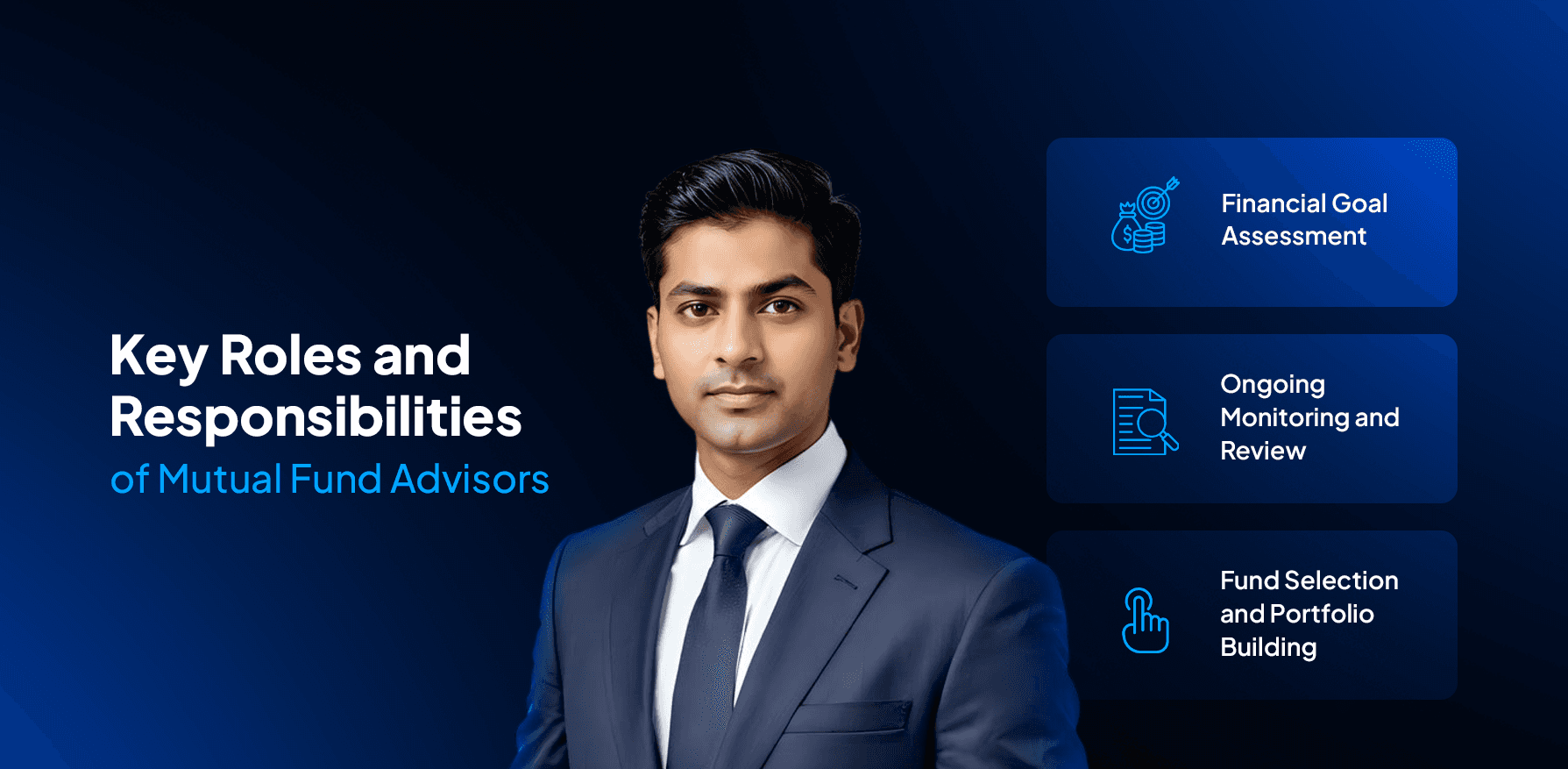
Key roles and responsibilities of a mutual fund advisor including goal assessment, portfolio building, and review
  1. Financial Goal Assessment

Advisors start by understanding your income, expenses, and future needs. They map your financial goals to specific time horizons. Short-term goals might need debt funds while long-term wealth creation favors equity exposure.

This assessment covers retirement planning, children's education, and wealth accumulation targets. Your advisor quantifies each goal in monetary terms. They then create an investment roadmap with realistic timelines and required monthly contributions.

  1. Fund Selection and Portfolio Building

Choosing the right funds requires analyzing hundreds of schemes across categories. Advisors evaluate fund performance, expense ratios, fund manager track records, and investment strategies. They recommend funds that match your risk tolerance and financial objectives.

The portfolio construction process includes:

  1. Asset allocation between equity, debt, and hybrid funds based on your risk profile

  2. Diversification across market capitalizations, sectors, and fund houses to reduce concentration risk

  3. Selection of growth or dividend options based on your income needs and tax situation

  4. SIP amount calculation to meet your target corpus within the defined timeframe

Portfolio building at Ckredence Wealth follows a research-backed approach. We analyze market cycles and fund fundamentals before making recommendations.

3. Ongoing Monitoring and Review

Markets change and so do your life circumstances. Advisors track your portfolio performance against benchmarks. They provide regular updates on fund performance and suggest adjustments when needed.

Quarterly or half-yearly reviews help maintain portfolio health. Your advisor checks if funds continue to perform as expected. Underperforming funds get replaced with better alternatives.

Review activities include:

  • Performance comparison with relevant market indices

  • Rebalancing to maintain target asset allocation

  • Tax-loss harvesting opportunities during market corrections

  • Updating investment amounts based on income changes

How Mutual Fund Advisors Help You Build Wealth

  1. Personalized Investment Strategies

Generic investment advice rarely works for everyone. Advisors create customized strategies based on your unique situation. A 30-year-old professional needs different fund choices than someone nearing retirement.

Your advisor considers your income stability, existing investments, and family responsibilities. They design portfolios that reflect your comfort with market volatility. Conservative investors get more debt fund allocation while aggressive investors can handle higher equity exposure.

  1. Risk Management and Diversification

Putting all money in one fund or sector creates unnecessary risk. Advisors spread investments across different fund categories and asset classes. This diversification protects your portfolio during market downturns.

They also match fund volatility to your risk capacity. High-risk funds might offer better returns but can cause significant losses during corrections. Your advisor balances growth potential with downside protection based on your financial situation.

  1. Disciplined Investment Approach

Emotional decisions hurt investment returns more than market volatility. Advisors help you stay invested during market panic. They prevent you from chasing past performance or timing the market.

SIP planning through professional guidance builds wealth systematically. Your advisor sets realistic expectations about returns. They keep you focused on long-term goals rather than short-term market movements.

Types of Mutual Fund Advisors in India
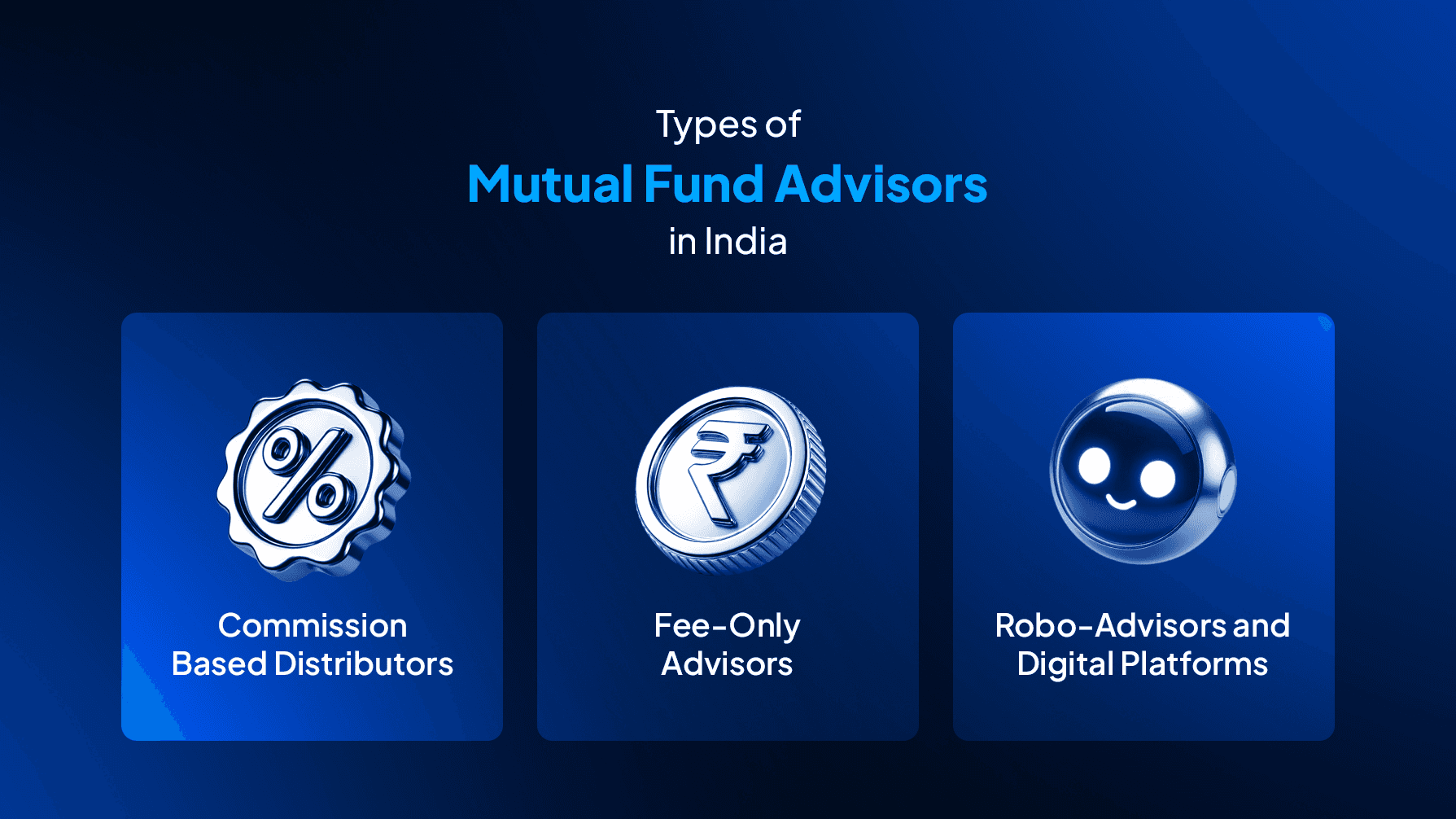
Types of mutual fund advisors in India including commission-based distributors, fee-only advisors, and robo platforms
  1. Commission-Based Distributors

These advisors earn commissions from fund houses for investments made through them. They receive a percentage of your investment amount or annual trail fees. This model offers zero upfront costs for investors.

Commission structures can sometimes create conflicts of interest. Distributors might recommend funds with higher commissions. However, SEBI regulations require them to disclose all commission details to clients.


  1. Fee-Only Advisors

Fee-only advisors charge clients directly for their services. They don't accept commissions from fund houses. This creates alignment between advisor and investor interests since recommendations are independent of commission structures.

Fee models include flat annual fees, hourly charges, or percentage of assets under advice. The total cost might be higher initially but can lead to better fund selection. Fee-only advice works well for investors with larger portfolios.


  1. Robo-Advisors and Digital Platforms

Technology platforms offer algorithm-based fund recommendations. They assess your risk profile through questionnaires and suggest portfolios automatically. These platforms provide lower-cost advisory services with minimal human interaction.

Digital advisors work well for tech-savvy investors comfortable with automated recommendations. They lack the personalized touch of human advisors. Complex financial situations still benefit from direct advisor relationships.

SEBI and AMFI Regulations for Mutual Fund Advisors

Regulatory compliance protects investor interests in India's mutual fund industry. SEBI mandates that all advisors must be certified through NISM Series V-A examination. This certification tests knowledge of mutual fund products, regulations, and investor protection norms.

AMFI certification further validates advisor competence. Advisors must register with AMFI and maintain their certifications through periodic renewals. These requirements ensure advisors stay updated with market developments and regulatory changes.

Compliance requirements include:

  • Disclosure of all fees and commissions before client onboarding

  • KYC verification for all clients through SEBI-approved processes

  • Suitability assessment to match products with client needs

  • Regular reporting of client portfolios and transaction details

Investors should verify advisor credentials before starting any relationship. Check AMFI registration numbers and SEBI registration status. At Ckredence Wealth, we maintain full SEBI compliance across all our wealth management services.

How to Choose the Right Mutual Fund Advisor

  1. Verify Credentials and Experience

Start by checking AMFI certification and SEBI registration. Ask about years of experience in mutual fund advisory. Advisors with longer track records have seen different market cycles.

Request references from existing clients if possible. Look for advisors who manage clients with similar profiles to yours. Industry certifications like CFP or CFA add credibility to their expertise.


  1. Evaluate Advisory Approach and Philosophy

Different advisors follow different investment philosophies. Some favor active fund selection while others prefer passive index funds. Understand their approach to portfolio management before committing.

Ask how they select funds and rebalance portfolios. Check if they provide written investment policy statements. The advisory process should be transparent and well-documented.


  1. Understand Fee Structures Clearly

Know exactly what you're paying for advisory services. Get fee breakdowns in writing before signing agreements. Compare costs across multiple advisors to understand market rates.

Ask about hidden charges or additional fees for portfolio reviews. Transparent pricing builds trust in the advisor-client relationship. Some advisors offer initial consultations free to help you evaluate their services.


  1. Assess Communication and Accessibility

Regular communication keeps you informed about portfolio performance. Check how often the advisor provides updates. Understand their availability for queries and urgent matters.

Some advisors offer quarterly meetings while others connect monthly. Digital access to portfolio statements should be standard. Choose advisors whose communication style matches your preferences.

Wealth advisor explaining mutual fund performance, asset allocation, and investment strategy to investors

Mutual Fund Advisor vs Financial Planner: Understanding the Difference

Mutual fund advisors specialize in fund selection and portfolio management. They focus specifically on mutual fund investments. Financial planners take a broader view of your complete financial life.

Financial planners address insurance needs, tax planning, retirement strategies, and estate planning. They might recommend mutual funds as part of an overall financial plan. The scope of services differs significantly between these two roles.

Many investors need both types of professionals at different life stages. Early career professionals might start with mutual fund advisors. As wealth grows, comprehensive financial planning becomes more valuable.

Ckredence Wealth offers integrated investment advisory services. We combine mutual fund expertise with broader wealth management strategies for high-net-worth individuals.

Common Mistakes to Avoid When Working with Advisors

1. Not Asking Enough Questions

Understand every recommendation your advisor makes. Ask for rationale behind fund selections and strategy changes. Question anything that seems unclear or doesn't match your goals.

2. Chasing Past Performance

Last year's top-performing fund might not repeat that success. Focus on consistent performers across market cycles instead. Past returns don't guarantee future results in any market condition.

3. Ignoring Regular Portfolio Reviews

Schedule periodic meetings even when markets are stable. Proactive adjustments prevent larger problems later. Regular reviews keep your portfolio aligned with changing goals and market conditions.

4. Not Disclosing Complete Financial Information

Share all relevant details about your income, debts, and existing investments. Incomplete information leads to unsuitable recommendations. Your advisor needs the full picture to help you effectively.

5. Making Investment Decisions Without Consultation

Avoid impulse investments based on tips or trends. Consult your advisor before making any portfolio changes. Independent decisions can disrupt your planned investment strategy.

6. Switching Advisors Too Frequently

Give your advisor reasonable time to deliver results. Frequent changes prevent consistent strategy execution. Switch only when there are valid reasons like poor service or ethical concerns.

7. Expecting Unrealistic Returns

Market conditions limit what advisors can deliver. Understand realistic return expectations for different fund categories. Unrealistic goals lead to disappointment and poor investment decisions.

The Cost of Mutual Fund Advisory Services

Commission-based models typically charge nothing upfront to investors. Fund houses pay distributors through entry loads or trail commissions. These costs are built into the fund's expense ratio.

Fee-only advisors charge between 0.5% to 2% of assets under management annually. Some charge flat fees ranging from ₹10,000 to ₹50,000 per year. Hourly consultation rates vary from ₹2,000 to ₹10,000 depending on advisor expertise.

Digital platforms offer the lowest costs with fees around 0.25% to 0.75% annually. These platforms use technology to reduce operational expenses. They pass some savings to investors through lower pricing.

Calculate total costs over your investment horizon before selecting a model. A higher fee structure might deliver better net returns if fund selection is superior. Focus on value delivered rather than just costs charged.

Technology and the Future of Mutual Fund Advisory

Digital transformation changes how investors access advisory services. Mobile apps provide instant portfolio access and transaction capabilities. AI-powered tools analyze fund performance and suggest optimizations.

Robo-advisory platforms have democratized access to professional guidance. Investors with smaller amounts can now get algorithm-based recommendations. These platforms use your risk profile to create automated portfolios.

However, human advisors still add value in complex situations. Behavioral coaching during market volatility prevents costly mistakes. Personalized advice for tax planning and goal-based investing requires human judgment.

The future likely combines technology efficiency with human expertise. Hybrid models offer digital tools for routine tasks and human advisors for strategic decisions. This approach delivers both cost efficiency and personalized service.

Why Should You Choose Ckredence Wealth for Mutual Fund Advisory?

High-net-worth individuals need advisors who understand their unique challenges. Your investment goals deserve professional attention backed by proven expertise. Ckredence Wealth brings 37 years of wealth management experience to your financial journey.

Solutions That Matter:

  • SEBI-registered advisory services with full regulatory compliance

  • Personalized mutual fund strategies aligned with your risk profile and goals

  • Access to both mutual funds and Portfolio Management Services for larger portfolios

  • Research-backed fund selection across equity, debt, and hybrid categories

Proven Track Record in Wealth Management

Client Assets: "₹805+ Crores managed with focus on long-term wealth creation"

Investment Expertise: "4 distinct PMS strategies covering different market conditions and investor objectives"

Client Trust: "376+ active clients across Gujarat and Maharashtra"

Your financial goals need expert guidance and transparent advice. Ckredence Wealth serves as your trusted partner for wealth creation. Our strategies adapt to market conditions while staying focused on your objectives.

Key Advisory Capabilities:

  • Dedicated relationship managers for personalized support

  • Regular portfolio reviews and performance reporting

  • Transparent fee structures with no hidden charges

  • Goal-based investment planning for retirement, education, and wealth accumulation

Smart investors need experienced advisors. Ckredence Wealth helps you build wealth through disciplined, research-backed strategies.

Ready to transform your investment approach? Schedule a Consultation!

Conclusion

Mutual fund advisors provide important guidance for investors building long-term wealth. They bring expertise in fund selection, portfolio construction, and risk management to your financial journey. The right advisor helps you avoid costly mistakes while staying focused on your goals.

Choose advisors based on credentials, experience, and fee transparency. Verify SEBI registration and AMFI certification before starting any relationship. Your wealth deserves professional management that prioritizes your interests above all else.

FAQs

What qualifications should a mutual fund advisor have in India?

A mutual fund advisor must hold AMFI certification through NISM Series V-A examination. They should be registered with SEBI or AMFI. Additional certifications like CFP or CFA add credibility.

How does a mutual fund advisor differ from a mutual fund distributor?

Advisors provide investment guidance and portfolio management services to clients. Distributors facilitate transactions between investors and fund houses. Both roles might overlap but focus areas differ.

What fees do mutual fund advisors charge in India?

Commission-based advisors earn from fund houses with no client charges. Fee-only advisors charge 0.5% to 2% of managed assets annually. Some charge flat fees or hourly consultation rates instead.

Can I invest in mutual funds without an advisor?

Yes, you can invest directly through fund house websites or platforms. Direct plans offer lower expense ratios. However, professional guidance helps with fund selection and portfolio management.

The mutual fund industry in India manages assets worth over ₹81.99 lakh crores as of Dec 2025. This massive growth brings a critical question for investors. How do you pick the right funds from thousands of options available?

  • Are you confused about which mutual fund schemes match your financial goals and risk appetite?

  • Do you struggle to track performance across multiple funds while managing your portfolio effectively?

  • Are you uncertain whether your current investment strategy will help you build long-term wealth?

A mutual fund advisor bridges this gap between investment confusion and financial clarity. These certified professionals help investors make informed decisions about fund selection, portfolio building, and ongoing investment management. The right advisor transforms complex financial choices into actionable strategies that align with your wealth creation goals.

Key Takeaways

  • Certified mutual fund advisors provide personalized fund recommendations based on individual risk profiles and financial objectives

  • SEBI and AMFI regulations require advisors to maintain specific certifications and follow strict compliance standards for investor protection

  • Professional advisors help build diversified portfolios across equity, debt, and hybrid funds to balance growth with risk management

  • Regular portfolio reviews and rebalancing by advisors help maintain alignment with changing market conditions and life goals

  • Fee structures vary between commission-based distributors and fee-only advisors, impacting long-term investment costs

  • Technology platforms now allow investors to access advisory services digitally while maintaining personalized guidance

  • Choosing the right advisor requires evaluating credentials, experience, transparency, and alignment with your investment philosophy

What Is a Mutual Fund Advisor?

A mutual fund advisor is a certified professional who provides investment guidance to individuals and organizations. They analyze your financial situation and recommend suitable mutual fund schemes. These advisors hold AMFI certification (like NISM Series V-A) and registration with regulatory bodies.

The advisor acts as your financial partner throughout the investment journey. They help you understand different fund categories, assess risks, and build portfolios aligned with your goals. At Ckredence Wealth, we work with investors to create customized mutual fund strategies that balance growth with capital preservation.

Advisors differ from fund managers who run the actual mutual fund schemes. Your advisor selects which funds to invest in from the market. Fund managers decide which stocks or bonds go inside those funds.

This distinction matters for your investment success. Advisors focus on your complete financial picture while fund managers focus on fund performance. Professional guidance becomes important when managing multiple schemes across different fund houses.

Key Roles and Responsibilities of Mutual Fund Advisors

Key roles and responsibilities of a mutual fund advisor including goal assessment, portfolio building, and review
  1. Financial Goal Assessment

Advisors start by understanding your income, expenses, and future needs. They map your financial goals to specific time horizons. Short-term goals might need debt funds while long-term wealth creation favors equity exposure.

This assessment covers retirement planning, children's education, and wealth accumulation targets. Your advisor quantifies each goal in monetary terms. They then create an investment roadmap with realistic timelines and required monthly contributions.

  1. Fund Selection and Portfolio Building

Choosing the right funds requires analyzing hundreds of schemes across categories. Advisors evaluate fund performance, expense ratios, fund manager track records, and investment strategies. They recommend funds that match your risk tolerance and financial objectives.

The portfolio construction process includes:

  1. Asset allocation between equity, debt, and hybrid funds based on your risk profile

  2. Diversification across market capitalizations, sectors, and fund houses to reduce concentration risk

  3. Selection of growth or dividend options based on your income needs and tax situation

  4. SIP amount calculation to meet your target corpus within the defined timeframe

Portfolio building at Ckredence Wealth follows a research-backed approach. We analyze market cycles and fund fundamentals before making recommendations.

3. Ongoing Monitoring and Review

Markets change and so do your life circumstances. Advisors track your portfolio performance against benchmarks. They provide regular updates on fund performance and suggest adjustments when needed.

Quarterly or half-yearly reviews help maintain portfolio health. Your advisor checks if funds continue to perform as expected. Underperforming funds get replaced with better alternatives.

Review activities include:

  • Performance comparison with relevant market indices

  • Rebalancing to maintain target asset allocation

  • Tax-loss harvesting opportunities during market corrections

  • Updating investment amounts based on income changes

How Mutual Fund Advisors Help You Build Wealth

  1. Personalized Investment Strategies

Generic investment advice rarely works for everyone. Advisors create customized strategies based on your unique situation. A 30-year-old professional needs different fund choices than someone nearing retirement.

Your advisor considers your income stability, existing investments, and family responsibilities. They design portfolios that reflect your comfort with market volatility. Conservative investors get more debt fund allocation while aggressive investors can handle higher equity exposure.

  1. Risk Management and Diversification

Putting all money in one fund or sector creates unnecessary risk. Advisors spread investments across different fund categories and asset classes. This diversification protects your portfolio during market downturns.

They also match fund volatility to your risk capacity. High-risk funds might offer better returns but can cause significant losses during corrections. Your advisor balances growth potential with downside protection based on your financial situation.

  1. Disciplined Investment Approach

Emotional decisions hurt investment returns more than market volatility. Advisors help you stay invested during market panic. They prevent you from chasing past performance or timing the market.

SIP planning through professional guidance builds wealth systematically. Your advisor sets realistic expectations about returns. They keep you focused on long-term goals rather than short-term market movements.

Types of Mutual Fund Advisors in India

Types of mutual fund advisors in India including commission-based distributors, fee-only advisors, and robo platforms
  1. Commission-Based Distributors

These advisors earn commissions from fund houses for investments made through them. They receive a percentage of your investment amount or annual trail fees. This model offers zero upfront costs for investors.

Commission structures can sometimes create conflicts of interest. Distributors might recommend funds with higher commissions. However, SEBI regulations require them to disclose all commission details to clients.


  1. Fee-Only Advisors

Fee-only advisors charge clients directly for their services. They don't accept commissions from fund houses. This creates alignment between advisor and investor interests since recommendations are independent of commission structures.

Fee models include flat annual fees, hourly charges, or percentage of assets under advice. The total cost might be higher initially but can lead to better fund selection. Fee-only advice works well for investors with larger portfolios.


  1. Robo-Advisors and Digital Platforms

Technology platforms offer algorithm-based fund recommendations. They assess your risk profile through questionnaires and suggest portfolios automatically. These platforms provide lower-cost advisory services with minimal human interaction.

Digital advisors work well for tech-savvy investors comfortable with automated recommendations. They lack the personalized touch of human advisors. Complex financial situations still benefit from direct advisor relationships.

SEBI and AMFI Regulations for Mutual Fund Advisors

Regulatory compliance protects investor interests in India's mutual fund industry. SEBI mandates that all advisors must be certified through NISM Series V-A examination. This certification tests knowledge of mutual fund products, regulations, and investor protection norms.

AMFI certification further validates advisor competence. Advisors must register with AMFI and maintain their certifications through periodic renewals. These requirements ensure advisors stay updated with market developments and regulatory changes.

Compliance requirements include:

  • Disclosure of all fees and commissions before client onboarding

  • KYC verification for all clients through SEBI-approved processes

  • Suitability assessment to match products with client needs

  • Regular reporting of client portfolios and transaction details

Investors should verify advisor credentials before starting any relationship. Check AMFI registration numbers and SEBI registration status. At Ckredence Wealth, we maintain full SEBI compliance across all our wealth management services.

How to Choose the Right Mutual Fund Advisor

  1. Verify Credentials and Experience

Start by checking AMFI certification and SEBI registration. Ask about years of experience in mutual fund advisory. Advisors with longer track records have seen different market cycles.

Request references from existing clients if possible. Look for advisors who manage clients with similar profiles to yours. Industry certifications like CFP or CFA add credibility to their expertise.


  1. Evaluate Advisory Approach and Philosophy

Different advisors follow different investment philosophies. Some favor active fund selection while others prefer passive index funds. Understand their approach to portfolio management before committing.

Ask how they select funds and rebalance portfolios. Check if they provide written investment policy statements. The advisory process should be transparent and well-documented.


  1. Understand Fee Structures Clearly

Know exactly what you're paying for advisory services. Get fee breakdowns in writing before signing agreements. Compare costs across multiple advisors to understand market rates.

Ask about hidden charges or additional fees for portfolio reviews. Transparent pricing builds trust in the advisor-client relationship. Some advisors offer initial consultations free to help you evaluate their services.


  1. Assess Communication and Accessibility

Regular communication keeps you informed about portfolio performance. Check how often the advisor provides updates. Understand their availability for queries and urgent matters.

Some advisors offer quarterly meetings while others connect monthly. Digital access to portfolio statements should be standard. Choose advisors whose communication style matches your preferences.

Wealth advisor explaining mutual fund performance, asset allocation, and investment strategy to investors

Mutual Fund Advisor vs Financial Planner: Understanding the Difference

Mutual fund advisors specialize in fund selection and portfolio management. They focus specifically on mutual fund investments. Financial planners take a broader view of your complete financial life.

Financial planners address insurance needs, tax planning, retirement strategies, and estate planning. They might recommend mutual funds as part of an overall financial plan. The scope of services differs significantly between these two roles.

Many investors need both types of professionals at different life stages. Early career professionals might start with mutual fund advisors. As wealth grows, comprehensive financial planning becomes more valuable.

Ckredence Wealth offers integrated investment advisory services. We combine mutual fund expertise with broader wealth management strategies for high-net-worth individuals.

Common Mistakes to Avoid When Working with Advisors

1. Not Asking Enough Questions

Understand every recommendation your advisor makes. Ask for rationale behind fund selections and strategy changes. Question anything that seems unclear or doesn't match your goals.

2. Chasing Past Performance

Last year's top-performing fund might not repeat that success. Focus on consistent performers across market cycles instead. Past returns don't guarantee future results in any market condition.

3. Ignoring Regular Portfolio Reviews

Schedule periodic meetings even when markets are stable. Proactive adjustments prevent larger problems later. Regular reviews keep your portfolio aligned with changing goals and market conditions.

4. Not Disclosing Complete Financial Information

Share all relevant details about your income, debts, and existing investments. Incomplete information leads to unsuitable recommendations. Your advisor needs the full picture to help you effectively.

5. Making Investment Decisions Without Consultation

Avoid impulse investments based on tips or trends. Consult your advisor before making any portfolio changes. Independent decisions can disrupt your planned investment strategy.

6. Switching Advisors Too Frequently

Give your advisor reasonable time to deliver results. Frequent changes prevent consistent strategy execution. Switch only when there are valid reasons like poor service or ethical concerns.

7. Expecting Unrealistic Returns

Market conditions limit what advisors can deliver. Understand realistic return expectations for different fund categories. Unrealistic goals lead to disappointment and poor investment decisions.

The Cost of Mutual Fund Advisory Services

Commission-based models typically charge nothing upfront to investors. Fund houses pay distributors through entry loads or trail commissions. These costs are built into the fund's expense ratio.

Fee-only advisors charge between 0.5% to 2% of assets under management annually. Some charge flat fees ranging from ₹10,000 to ₹50,000 per year. Hourly consultation rates vary from ₹2,000 to ₹10,000 depending on advisor expertise.

Digital platforms offer the lowest costs with fees around 0.25% to 0.75% annually. These platforms use technology to reduce operational expenses. They pass some savings to investors through lower pricing.

Calculate total costs over your investment horizon before selecting a model. A higher fee structure might deliver better net returns if fund selection is superior. Focus on value delivered rather than just costs charged.

Technology and the Future of Mutual Fund Advisory

Digital transformation changes how investors access advisory services. Mobile apps provide instant portfolio access and transaction capabilities. AI-powered tools analyze fund performance and suggest optimizations.

Robo-advisory platforms have democratized access to professional guidance. Investors with smaller amounts can now get algorithm-based recommendations. These platforms use your risk profile to create automated portfolios.

However, human advisors still add value in complex situations. Behavioral coaching during market volatility prevents costly mistakes. Personalized advice for tax planning and goal-based investing requires human judgment.

The future likely combines technology efficiency with human expertise. Hybrid models offer digital tools for routine tasks and human advisors for strategic decisions. This approach delivers both cost efficiency and personalized service.

Why Should You Choose Ckredence Wealth for Mutual Fund Advisory?

High-net-worth individuals need advisors who understand their unique challenges. Your investment goals deserve professional attention backed by proven expertise. Ckredence Wealth brings 37 years of wealth management experience to your financial journey.

Solutions That Matter:

  • SEBI-registered advisory services with full regulatory compliance

  • Personalized mutual fund strategies aligned with your risk profile and goals

  • Access to both mutual funds and Portfolio Management Services for larger portfolios

  • Research-backed fund selection across equity, debt, and hybrid categories

Proven Track Record in Wealth Management

Client Assets: "₹805+ Crores managed with focus on long-term wealth creation"

Investment Expertise: "4 distinct PMS strategies covering different market conditions and investor objectives"

Client Trust: "376+ active clients across Gujarat and Maharashtra"

Your financial goals need expert guidance and transparent advice. Ckredence Wealth serves as your trusted partner for wealth creation. Our strategies adapt to market conditions while staying focused on your objectives.

Key Advisory Capabilities:

  • Dedicated relationship managers for personalized support

  • Regular portfolio reviews and performance reporting

  • Transparent fee structures with no hidden charges

  • Goal-based investment planning for retirement, education, and wealth accumulation

Smart investors need experienced advisors. Ckredence Wealth helps you build wealth through disciplined, research-backed strategies.

Ready to transform your investment approach? Schedule a Consultation!

Conclusion

Mutual fund advisors provide important guidance for investors building long-term wealth. They bring expertise in fund selection, portfolio construction, and risk management to your financial journey. The right advisor helps you avoid costly mistakes while staying focused on your goals.

Choose advisors based on credentials, experience, and fee transparency. Verify SEBI registration and AMFI certification before starting any relationship. Your wealth deserves professional management that prioritizes your interests above all else.

FAQs

What qualifications should a mutual fund advisor have in India?

A mutual fund advisor must hold AMFI certification through NISM Series V-A examination. They should be registered with SEBI or AMFI. Additional certifications like CFP or CFA add credibility.

How does a mutual fund advisor differ from a mutual fund distributor?

Advisors provide investment guidance and portfolio management services to clients. Distributors facilitate transactions between investors and fund houses. Both roles might overlap but focus areas differ.

What fees do mutual fund advisors charge in India?

Commission-based advisors earn from fund houses with no client charges. Fee-only advisors charge 0.5% to 2% of managed assets annually. Some charge flat fees or hourly consultation rates instead.

Can I invest in mutual funds without an advisor?

Yes, you can invest directly through fund house websites or platforms. Direct plans offer lower expense ratios. However, professional guidance helps with fund selection and portfolio management.